29 Jul 2020
Lemon Orchard

Why use organic fertilisers in citrus orchards?

Current market trends of higher income group consumers include a desire for information related to the products they buy, such as its origin, safety, and social responsibility of the producer. Organically grown fruits seem to be favoured over conventionally produced fruit. Organic production requirements affect all practices related to fruit production including type of fertilisers used, pest and disease control as well as post-harvest chemicals used.

READ MORE

29 Jun 2020
Citrus Trees

Liquid organic fertilizers for sustainable agriculture: Nutrient uptake of organic versus mineral fertilizers in citrus trees.

The main objective of this study was to compare the performance of two liquid organic fertilizers, an animal and a plant-based fertilizer, with mineral fertilization on citrus trees. The source of the fertilizer (mineral or organic) had significant effect in the nutritional status of the organic and conventionally managed mandarins. Nutrient uptake, vegetative growth, carbohydrate synthesis and soil characteristics were analyzed. Results showed that plants fertilized with animal based liquid fertilizers exhibited higher total biomass with a more profuse development of new developing organs (leaves and fibrous roots).

READ MORE

29 Jun 2020
Citrus Rehabilitation from HLB

Rehabilitation of HLB infected citrus trees using severe pruning and nutritional sprays.

Citrus trees infected with Huanglongbing (HLB) bacteria become weak and develop dieback, resulting in lost production. These trees eventually decline to a production level that is not economical to maintain in a citrus operation. Sixteen-year-old ‘Valencia’ (Citrus sinensis Macf.) orange trees on Swingle citrumelo rootstock [C. paradisi × Poncirus trifoliata (L.) Raf.], 100% infected with HLB, in decline and losing production, were severely pruned (buckhorned) to stimulate regrowth and the new flush treated with foliar nutritional sprays. Nutritional sprays included the “Boyd cocktail” and two other nutrient treatments that contained phosphites plus nickel and cobalt. Heavily pruned trees and unpruned standard control trees were compared for shoot growth and canopy development.

READ MORE

26 May 2020
Citrus Greening

Assessment of unconventional antimicrobial compounds for the control of ‘Candidatus Liberibacter asiaticus’, the causative agent of citrus greening disease.

In this study, newly identified small molecules were examined for efficacy against ‘Candidatus Liberibacter asiaticus’ in commercial groves of sweet orange (Citrus sinensis) and white grapefruit (Citrus paradisi) trees. We used benzbromarone and/or tolfenamic acid delivered by trunk injection. We evaluated safety and efficacy parameters by performing RNAseq of the citrus host responses, 16S rRNA gene sequencing to characterize citrus-associated microbial communities during treatment, and qRT-PCR as an indirect determination of ‘Ca. L. asiaticus’ viability. Analyses of the C. sinensis transcriptome indicated that each treatment consistently induced genes associated with normal metabolism and growth, without compromising tree viability or negatively affecting the indigenous citrus-associated microbiota.

READ MORE

28 Apr 2020
Crop Management

Organic Orchard Management: Nutrition for Organic Orchards

In organic systems, soil fertility, crop nutrient status, and groundcover management are closely linked. As specified under the National Organic Program (NOP), “Organic producers must rely upon animal manures, compost (organic matter of animal and/or plant origin that has been decomposed by microorganisms), and cover crops to supply some, if not all, of the required nutrients for healthy crops.”

Naturally derived soil amendments have variable nutrient levels depending upon the sources from which they were derived. Therefore, nutrient availability from composts and cover crops will be specific for the soil type and crop demand in each orchard. Besides supplying nutrients, soil amendments can increase soil organic matter, balance pH levels, increase microbial activity, improve soil structure and tilth, improve drainage in clayey soils, improve water-holding capacity in sandy or gravelly soils, and help to suppress some root diseases.READ MORE

28 Apr 2020
Cover Crops

Orchard Floor Management: Cover Crops

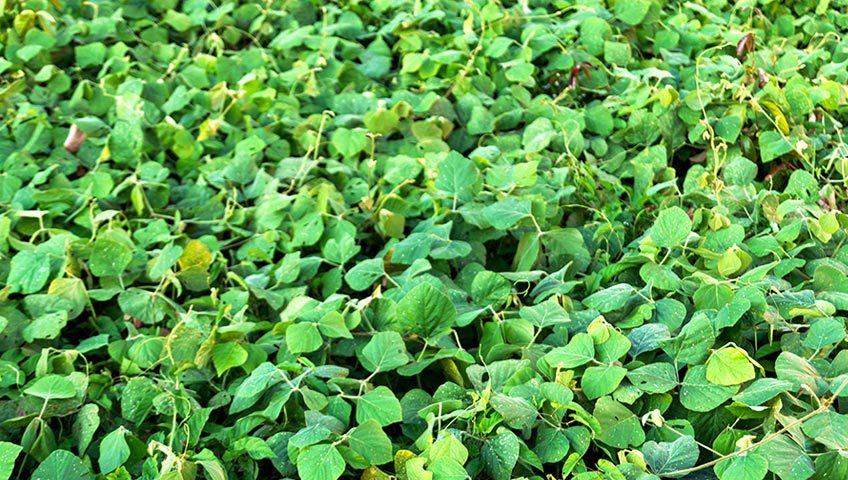
Cover crops can be one component of orchard floor management, but are not a “system” alone. Cover crops are important in maintaining soil structure, encouraging water infiltration, reducing erosion, reducing mud and dust, and maintaining an acceptable driving surface for equipment. A good cover crop can be established with grasses, broadleaf plants such as legumes, or both, although a uniform plant stand is often easier to manage than one made up of multiple crop species. A cover crop should establish itself quickly and thereafter should not require much maintenance. It should be chosen and managed so that competition with trees is minimal.

Grasses are the most common cover crops in orchards. Many different grasses and grass mixtures are available, so orchardists can choose what is best suited to each particular situation. Several low growing perennial rye grasses are available and allow easy orchard access even when headed out.

READ MORE

27 Feb 2020
Cover Crop Management

Cover Crop Management

There are numerous management issues to consider when using cover crops. Once you decide what your major goals are for using cover crops, select one or more to try out. Consider using combinations of species. You also need to decide where cover crops best fit in your system—planted following the main crop, intercropped during part or all of the growing of the main crop, or grown for an entire growing season in order to build up the soil.

READ MORE

27 Feb 2020
Soil Health

Soil Health in Orchards

Orchard soil health, or soil quality, is the capacity of soil to support productive trees over time without negatively affecting the surrounding environment. Soil health is influenced by interacting biological, physical, and chemical properties of soil. Active soil biological communities mineralize nitrogen, create soil structure, and compete with plant pathogens. Physical properties of soil determine its ability to store and release nutrients; accommodate water entry, storage, and movement; provide sufficient oxygen for roots and microbes; and moderate environmental stress. Chemical aspects of soil health include nutrient presence and availability, pH, cation exchange capacity (CEC), salinity, and the presence of any contaminants, such as heavy metals or persistent pesticide residues.

READ MORE