25 May 2021
HLB

CRISPR/Cas technology could enable early diagnosis of devastating citrus disease

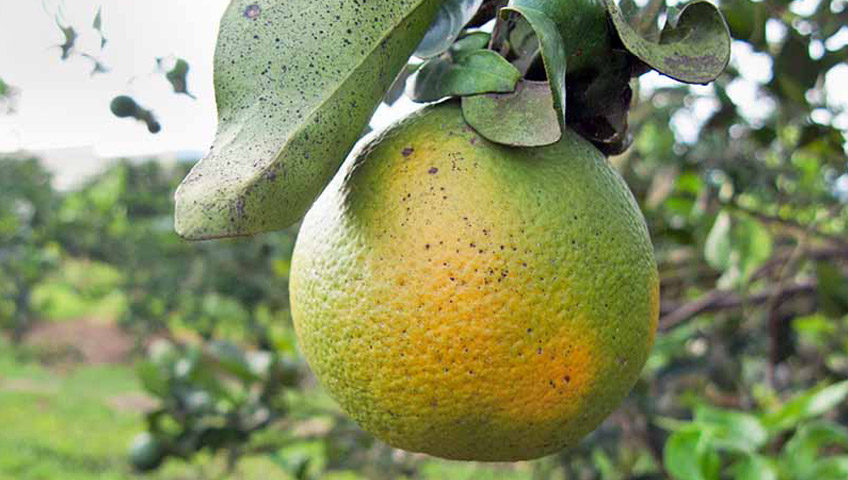
Scientists from Penn State and the U.S. Department of Agriculture have developed a diagnostic test that enables early detection of Huanglongbing (HLB) by detecting the presence of the bacterium that causes the disease, i.e. Candidatus Liberibacter asiaticus (CLas). Early detection of CLas is vital in controlling the spread of HLB because trees that have been infected by CLas can serve as a disease reservoir for years before symptoms are visible.

READ MORE

25 May 2021
HLB-antimicrobial peptide

A stable antimicrobial peptide with dual functions of treating and preventing citrus Huanglongbing

Researchers at the University of California have identified stable antimicrobial peptides (SAMPs) that can help to control the spread of Huanglongbing (HLB), also known as citrus greening disease. These peptides work in two ways: They inhibit the growth of Candidatus Liberibacter asiaticus (CLas) – the bacterium causing the disease – in trees that are HLB-positive and it helps to induce immunity in healthy trees.

READ MORE

28 Apr 2021
Trapping 2021

Trapping for Asian Citrus Psyllid in Southern Africa: Feb / Mar 2021

The article describes how the presence of the Asian Citrus Psyllid (ACP), Diaphorina citri Kuwayama (Hemiptera: Liviidae), in parts of Africa, most recently trapped in southwestern Tanzania and Kenya, is increasing the risk to citriculture in Southern Africa. ACP is an effective vector of Huanglongbing (HLB), which is a destructive citrus greening disease and is associated with the gram negative α-Proteobacteria Candidatus Liberibacter asiaticus (Las).

READ MORE

28 Apr 2021

New pigmented orange varieties allow for year-round red orange promotions

BioGold North America, a citrus variety development company, is now licensing growers to plant two new red orange varieties in California. BioGold North America is a part of the BioGold International family of companies, which has footprints in Australia, Spain, the Mediterranean Basin, South Africa, South America and the United States.

READ MORE

28 Apr 2021
Orange Blossom

Effects of gibberellin treatment during flowering induction period on global gene expression and the transcription of flowering-control genes in Citrus buds

As we enter the flower induction stage different factor control the amount of flowering for the next season. Gibberellic acid (GA) is a strong inhibitor for the flowering genes in Citrus. The aim of the study was to determine to what length GA has got an influence. GA was applied on citrus bud and the genetics analyzed and more Leafy mRNA were transcribed in these buds.

READ MORE

28 Apr 2021
Lane Late Citrus

Response of Navel Lane Late citrus trees to regulated deficit irrigation: Yield components and fruit composition

The aim of this study was to determine how regulated deficit irrigation (RDI) would affect the yield and fruit quality parameters at harvest for lane late Navel during the summer month / fruit growth phase 2. The final fruit size of all RDI treatments were smaller compared to the control, however, The first treatment of 50% ET0 had the best internal quality fruit with higher total soluble solids and acids. The latter treatment had a 19% yield reduction due to fruit size.

READ MORE

25 Mar 2021
Citrus and Avocado

Timing Citrus and Avocado Foliar Nutrient Applications to Increase Fruit Set and Size

The goal of this research was to identify the role essential nutrients play in the physiology of tree crops, and then to apply the nutrient as a foliar fertilizer to stimulate a specific metabolic process at phenological stages when nutrient demand is high. This approach has proven successful. A single winter prebloom foliar application of nitrogen as low-biuret urea [0.16 kg N/tree (0.35 lb N/tree)] to 30-year-old ‘Washington’ navel orange (Citrus sinensis L. Osbeck) trees during flower initiation significantly increased yield and fruit number per tree for each of 3 consecutive years (P ≤ 0.05).

READ MORE

25 Mar 2021
Citrus Greening

Citrus Greening: Management Strategies and their Economic Impact

Citrus huanglongbing (HLB), or greening, is the most destructive citrus disease worldwide and is threatening the sustainability of the industry in major citrus-growing regions. Various treatments have been proposed in the literature to manage the disease. We review such literature and conduct an economic analysis based on the reported treatment effects on fruit yield and quality to identify cost-effective management strategies.

READ MORE