05 Dec 2020
Citrus Industry

SA’s citrus beats the world’s Covid blues

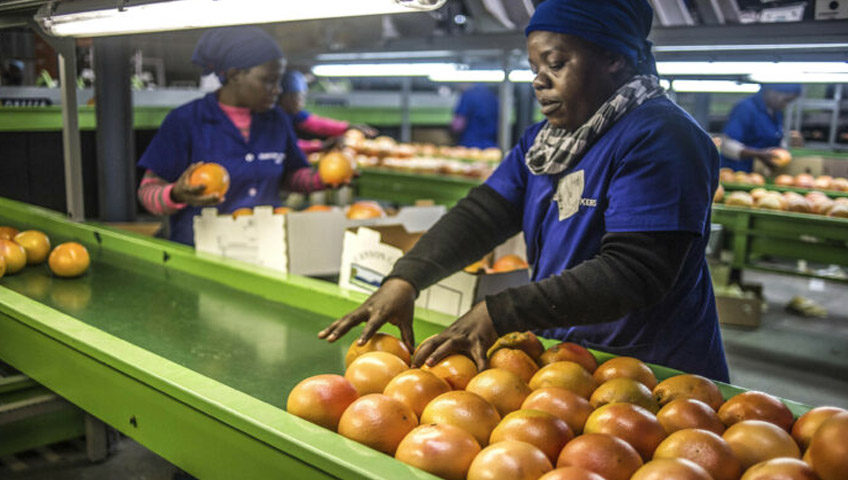
Despite the Covid-19 pandemic and all the uncertainties it caused, the 2020 citrus season turned out to be one of the best that South Africa has ever had. On estimate, South Africa exported 21.3 million cartons more than the previous season. Better access to US markets due to additional ports of entry, and access to Philippine markets, have contributed to an increase in demand for South African citrus.

READ MORE

05 Dec 2020
Cover Crops

Cover crops for citrus

Cover crops are specific crops not intended for sale but for soil improvement and sustainability. They are increasingly common in the agricultural fields of the Midwest and other grain-producing regions because of the wide range of benefits not just for the soil, but also the cash crop. In those systems, cover crops improve water and nutrient retention, promote microbial activity, reduce weed growth and insect pests, and improve plant growth. Similar impacts have been found in tree crops like apples and peaches, where cover crops are planted in row middles.

READ MORE

23 Nov 2020
Citrus Exports

SA citrus exports to US up 50%, set to grow even further as local growers now have access to more ports

More South African citrus fruits will be heading to the US under a new agreement. Early this month, the US government announced the opening of several new ports for South African citrus fruits. The US department of agriculture’s Animal and Plant Health Inspection Service approved the use of additional ports for South African citrus on November 5. The US embassy said the facilitation of the trade between the two countries provided flexibility to American retailers and wholesalers, lowering transportation costs and broadening the reach of South African citrus to other regions.

READ MORE

23 Nov 2020
Crop Manipulation

Crop manipulation uppermost on the minds of South African citrus growers

South Africa’s Limpopo and Mpumalanga citrus production regions enjoyed mild temperatures during an “almost ideal” fruit set this spring on all cultivars, including on seedless Valencias. Regions that have been receiving sub-average rainfall for years now, had substantial rain early last month. “Producers need to be cognisant of the potential negative impact of too high fruit set, of which a reduction in fruit size is the most problematic,” the South African citrus industry’s technical service Citrus Research International reminds growers.

READ MORE

23 Nov 2020
Flooding

Impacts and management of flooding and waterlogging in citrus orchards

The recent heavy rainfall and flooding events in NSW may cause some immediate damage to trees, but may also have significant long term impacts on citrus orchards, particularly those planted on heavy soils or those with impeded drainage. Previous flooding events in the MIA Previous flooding and high rainfall events occurred in the Murrumbidgee Irrigation Areas (MIA) in the 1930’s and 40’s (during the winter months) and the impacts of those events, combined with a tendency to over-water resulted in considerable decline in tree health and the death of many trees. Survey and research work undertaken by Dr. Lilian Fraser concluded that one of the main causes of tree death and decline was due to infection by the root rot fungus Phytophthora citrophthora.

READ MORE

23 Nov 2020
Climate Change

Potential climate change impacts on citrus water requirement across major producing areas in the world.

Understanding how potential climate change will affect availability of water resources for citrus production globally is needed. The main goal of this study is to investigate impacts of potential future climate change on citrus irrigation requirements (IRR) in major global citrus producing regions, e.g., Africa, Asia, Australia, Mediterranean, Americas. The Irrigation Management System (IManSys) model was used to calculate optimum IRR for the baseline period (1986–2005) and two future periods (2055s and 2090s) subject to combination of five and seven temperature and precipitation levels, respectively. Predicted IRR show significant spatio-temporal variations across study regions. Future annual IRR are predicted to globally decrease; however, future monthly IRR showed mixed results.

READ MORE

20 Oct 2020
Leaf Abscission

Hormonal regulation of fruitlet abscission induced by carbohydrate shortage in citrus

Like many fruit trees species, citrus trees blossom with high profusion and thereafter exhibit massive fruitlet abscission. Current evidence indicates that this process is under hormonal and metabolic regulation (Gillaspy et al. 1993). In citrus, it has been suggested that after hormonal activation of initial fruit growth subsequent development is mostly supported by nutrient supply (Talon et al. 1997). Thus, once mineral and water requirements are satisfied, competition for photoassimilates is thought to be responsible for fruit drop (Moss et al. 1972; Powell and Krezdorn 1977; Goldschmidt and Koch 1996).

READ MORE

20 Oct 2020
Managing Salinity in Citrus

Managing Salinity in Citrus

Although citrus (Citrus spp.) is sensitive to salinity, acceptable production can be achieved with moderate salinity levels, depending on the climate, scion cultivar, rootstock, and irrigation-fertilizer management. Irrigation scheduling is a key factor in managing salinity in areas with salinity problems. Increasing irrigation frequency and applying water in excess of the crop water requirement are recommended to leach the salts and minimize the salt concentration in the root zone. Overhead sprinkler irrigation should be avoided when using water containing high levels of salts because salt residues can accumulate on the foliage and cause serious injury. Much of the leaf and trunk damage associated with direct foliar uptake of salts can be reduced by using microirrigation systems.

READ MORE